March 21, 2026

A Stick of Good Fortune is now available

 Dear friends,

I am deeply honored to share that my second memoir, A Stick of Good Fortune, is now available on Amazon and will soon be available in local bookstores.

This book is not only about my personal journey—it is about all of us and the life we shared in the refugee camps along the Thai-Cambodian border. It reflects the struggle, uncertainty, hunger, fear, hope, and resilience that shaped those years.

It is a story of survival—of how we supported one another and held on to our dignity through some of the most difficult moments of our lives. Many of the memories within these pages belong not only to me, but to all of us. I only wish I could have included everyone’s story. 

This book is a tribute to our shared past—to those who did not make it, to those who carried one another through darkness, and to the strength that guided us toward freedom and a new beginning.

With gratitude and remembrance,

Sieu 


     On Amazon

     A Stick of Good Fortune


The first book, A Cloak of Good Fortune, is also available on Amazon:


 A Cloak of Good Fortune

February 18, 2026

A Stick of Good Fortune : Second autobiography from Sieu Sean Do is coming in March 2026

A second autobiography by Sieu Sean Do is coming in March this year. This book,  titled "A Stick of Good Fortune" is the second after the first book published in December 2019, "A Cloak of Good Fortune

A Memoir by Sieu Sean Do

A Stick of Good Fortune is a gripping memoir of survival, faith, and the unbreakable human spirit.

Born into a loving family in Cambodia, the author’s childhood was violently shattered when the Khmer Rouge seized power in 1975. Millions were driven from their homes, torn from loved ones, and thrust into a brutal world of forced labor, starvation, and terror. Under a regime determined to erase identity, family, and hope, he endured repeated brushes with death.

Survival itself seemed almost impossible, but small signs of destiny appeared to guide him—a thread of fate, or a whisper of protection. The prognostication from a humble "fortune stick" rooted in Cambodian spiritual belief became a recurring symbol of faith and the unseen force that appeared to shield him through unimaginable danger.

Through years of exile and landscapes of loss, his journey carried him through multiple refugee camps along the Thai-Cambodian border, where survival demanded courage, perseverance, and sometimes just plain luck. Amid disease, violence, and grief, the author emerges as a healer, and a helper—working as a translator, assisting international medical teams, and supporting fellow refugees. In these acts of service, he discovers meaning, resilience, and a renewed sense of purpose forged in adversity.

At once intimate and historically vital, A Stick of Good Fortune bears witness to one of the twentieth century’s darkest chapters. At the same time, it affirms the possibility of compassion, dignity, and hope in the aftermath of unspeakable physical and psychological trauma.


A link to A Stick of Good Fortune  will appear here once it's available on Amazon in March 2026


* * *
*

The first book is still available here:  A Cloak of Good Fortune 


October 04, 2024

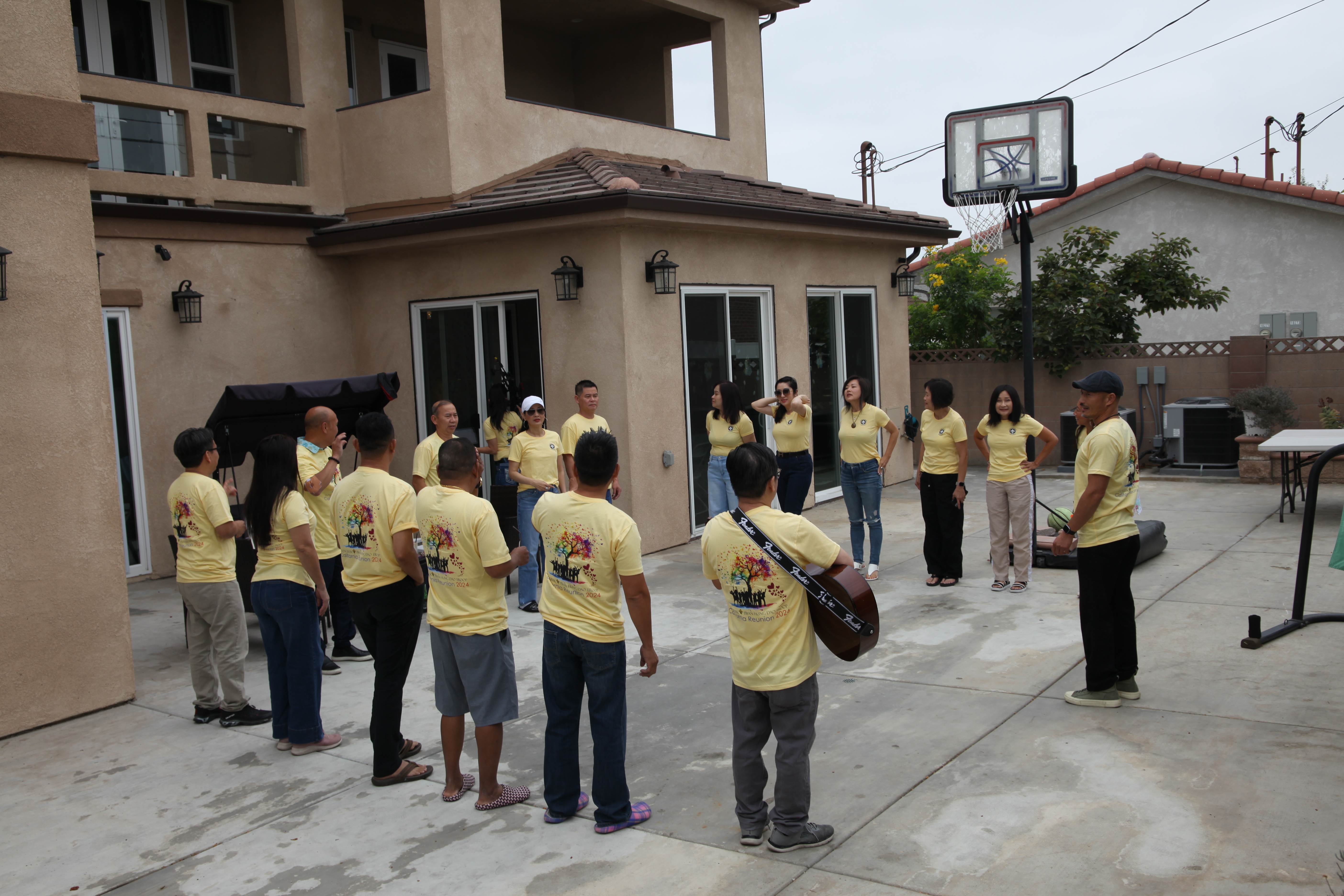
VNLR Scout Reunion 09-2024- Hội Ngộ Hướng Đạo Trần Hưng Đạo tháng 9, 2024

Some photos of the reunion in California, from 19 to 21 September, 2024

The full album could be viewed here:

https://drive.google.com/drive/folders/1v_rHjX9_TIDLaGs-XgHnQXHSIgSAJ1bM?usp=drive_link 


May 01, 2024

Repost: Chuyện Bây Giờ Mới Kể: Father André Lamothe SJ

I met father André for the first time at Vietnamese land refugee camp in Nong Samet. He arrived toward the end of our refuge there, around July or August 1983. We met him in better condition than anywhere before that, but we were still in depression about the whole situation. Some of us were lucky to be transferred to Panatnikhom for resettlement, but there was still no hope for the  rest of us. He celebrated mass and talked to us, showing care for each person he met. Before he left, the refugees handed him a big sack full of letters, there must be hundreds of them. We asked him to add the stamp and to mail to our relatives. It seemed normal and customary that we asked any Westerners to mail letter for us.

In March 1985, I was transferred to Bataan to study English and American culture. By chance I saw him celebrate mass at Bataan church and I met him the second time at his residence. Time has passed and many events have intervened in between, but his memory did not fail. He still remembered me well and treated me fondly. I was so moved by his kindness.


I became a kind of personal secretary for him thereafter until he was called back to Canada. I was cooking, eating, staying overnight some times with him. The whole time I was to write letters to many, many people who wrote to him. There was always a thick stack of letters, most in Vietnamese, some in English, all asking for help. I did not understand the situation of each of the people who wrote the letter, so he would patiently explain to me, in Vietnamese, because Vietnamese was  what he wanted to write with, and I would write the reply. Some very short, some very long, but always ended with love and well wishes. I would see his face brighten, his smile broaden every time I finished a letter and read aloud for him to hear.

Father André left for Canada one day in April 1985, barely one month into my transit in Bataan.

I felt sad and lonely again

But life flows on. Time passes and many events go by. My memory does not fail, I believe neither does his.

Until I hear he departed once more, for the last time, in 2010.
* *
*

Please keep us in memory, Father, watch upon and pray for each of us, as you replied to each of those who wrote to you.


With Father André Lamothe in Bataan PRPC- 4/1985
From left: Hùng (refugee from Taiwan), Vân, Hòang, Óanh, Father André Lamothe, Hưng, Thanh-Hương


October 18, 2023

Đọc sách Hành Trình Người Đi Cứu Nước của anh Phạm Hoàng Tùng

Tình cờ coi được sách Hành Trình Người Đi Cứu Nước của anh Phạm Hoàng Tùng, một hồi ký của một cuộc chiến không cân bằng, đầy bi thương hùng tráng của anh Tùng và đồng đội, trong đó có những người từng sống trong các trại tị nạn đường bộ 40 năm về trước.  

Các bạn còn nhớ họ không? 

 Xin post link để mọi người có thể vô đọc tài liệu vô giá này của anh.

Hành Trình Người Đi Cứu Nước Phạm Hoàng Tùng


July 31, 2023

Red Hill 1983: Fear, Uncertainty Mark Refugees' Lives on Thai Border

Fear, Uncertainty Mark Refugees' Lives on Thai Border
By William Branigin April 23, 1983 - The Washington Post

https://www.washingtonpost.com/archive/politics/1983/04/23/fear-uncertainty-mark-refugees-lives-on-thai-border/ab889bb5-ae02-4ea6-8a33-29cc9741bea5/

" the 147 Vietnamese from Phnom Chat were lucky to have made it to the Red Hill camp at all without any loss of life. "


For 23,000 Cambodians who streamed across the Thai-Cambodian border three weeks ago to escape a Vietnamese attack on their refugee settlement, home is now a parched expanse of dusty scrub land known to relief workers as "Red Hill" near this Thai border village.

Food and water are provided by the U.N. Border Relief Organization. Otherwise, the refugees have only what they were able to carry with them on the six-mile trek from their camp at Phnom Chat. There is little activity amid the choking red dust and the stifling heat.

The only protection from the blazing sun comes from blue plastic sheets distributed by U.N. agencies and stretched across wooden poles to form makeshift shelters. There is no protection from the occasional Vietnamese artillery shells that have landed in the area since the refugees fled their Khmer Rouge-controlled camp on March 31.

Even more precarious is the existence of a minority within the camp: 147 Vietnamese who had been stuck at Phnom Chat since fleeing their homeland and making their way across Cambodia to the Thai border. Barred from refugee camps in Thailand under the Bangkok government's "humane deterrence" policy to discourage new refugee arrivals, these Vietnamese "land people" fear they will eventually be sent back across the border and will face the Cambodians' vengeance for the attack by Hanoi's troops.

"When we were at Phnom Chat the Khmer people always threatened us," said Pham Dinh Dai, a 29-year-old leader of the Vietnamese group. "They wanted to kill us. They treated us very badly. Some women were raped, and some persons were beaten."

"Now we are afraid we must return to Phnom Chat," he added. "If we return there we can be killed by the Khmers in revenge, although we are very different from the Hanoi Communists."

Similar fears were expressed by Nguyen Duc Chan, a 35-year-old doctor from Ho Chi Minh City (formerly Saigon) who said he arrived at the border five months ago. He said he fled to seek entry into the United States, where he has two brothers living in Washington, D.C., and one in Nebraska.

According to Pham Dinh Dai, the Vietnamese are frequently threatened at the Red Hill camp, where they live in a specially designated section. A team of 20 Thai soldiers comes every night to protect them from the Cambodians, he said.

He said the Vietnamese hope to be allowed to stay in Thailand to await resettlement abroad. But they and about 550 elsewhere on the border were not covered by a Thai decision earlier this year to relax the deterrence policy and allow nearly 1,900 Vietnamese land people to be processed for emigration.

Under the circumstances, western relief officials said, the 147 Vietnamese from Phnom Chat were lucky to have made it to the Red Hill camp at all without any loss of life.

According to Pham Dinh Dai, the Communist Khmer Rouge authorities at Phnom Chat "allowed us to run away with the Khmer people" when the Vietnamese troops attacked.

The Vietnamese refugees offered views of the fighting that differed markedly from the accounts of the Khmer Rouge, who ruled Cambodia brutally for nearly four years before the invading Vietnamese troops drove them from power.

According to one refugee, "some of the Khmer Rouge fighters stayed behind" at Phnom Chat, "but many ran away" with the civilians. "After they arrived here, the Khmer authorities appealed to them to go back to Phnom Chat and fight. Three truckloads went back on April 2. But many did not want to return."


Other refugees said scores of Cambodians were killed and wounded during the Vietnamese onslaught and while fleeing the camp. They said they came under heavy Vietnamese shelling even as they trekked inside Thailand.

For the 23,000 Cambodian civilians at Red Hill, there is little reason to think life will get much better. Many have been displaced numerous times since the Khmer Rouge took power in 1975 and since the Vietnamese ousted them in 1979.

"Where are they trudging to is really the question," said one relief official. "Every place has proved to be a transit stop."

He summed up the mood of the Cambodians here as one of "incredible resignation" to the continuing disastrous swirl of events affecting them "but no glimmer of hope that I can detect." 

 --------------------------------------------


Red Hill- Easter Day April 3, 1983


The story behind this photo:

March 31, 1983 the PAVN (People Army of Viet-Nam, or bộ đội) attacked and overran Phnom-Chat camp, all Cambodian and Vietnamese refugees evacuated to the Thailand border and set up camp next to the anti-tank ditch, since Thai soldiers prevented the refugees from going into Thailand. ICRC setup a clinic inside a big white tent right at the border to treat the sick and the wounded. The next day when the PAVN started shelling the anti-tank ditch, refugees were allowed to flee deeper into Thailand, to a campsite called Red-Hill. The ICRC clinic tent was left behind during the evacuation. When ICRC wanted to retrieve the tent from the border to set it up at Red-Hill, a group of Vietnamese refugees from Phnom-Chat volunteered to go back to the border and fetched it under the threat of PAVN attack, now that they controlled the area around the border.

The Vietnamese rode to the border on the back of the pick-up truck seen in the back ground, quickly took apart the tent and brought it back to Red-Hill. All the ICRC nurses and volunteers gathered to celebrate the successful mission.

This photo was taken then.


Design by Free WordPress Themes | Bloggerized by Lasantha - Premium Blogger Themes | Best WordPress Themes